

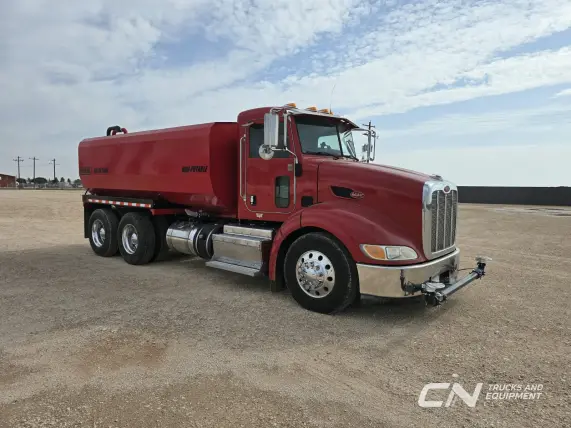
Available
13
Call (432) 758-3807 Text us WhatsApp
Mon-Fri 8am - 6pm Seminole, TX
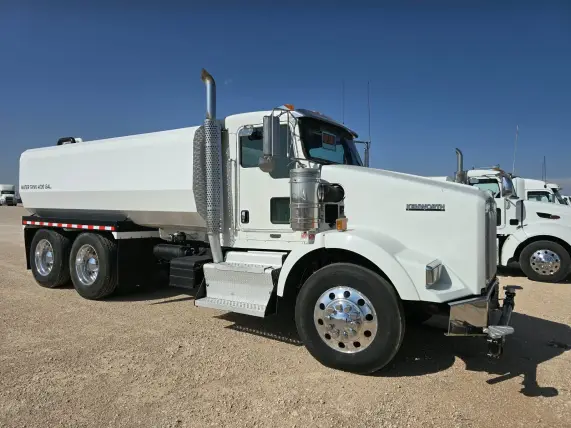
2,000 to 5,000-gallon water trucks with working pumps, spray bars and cannons. Built for dust control, compaction and job site water — priced to go to work, not to sit.
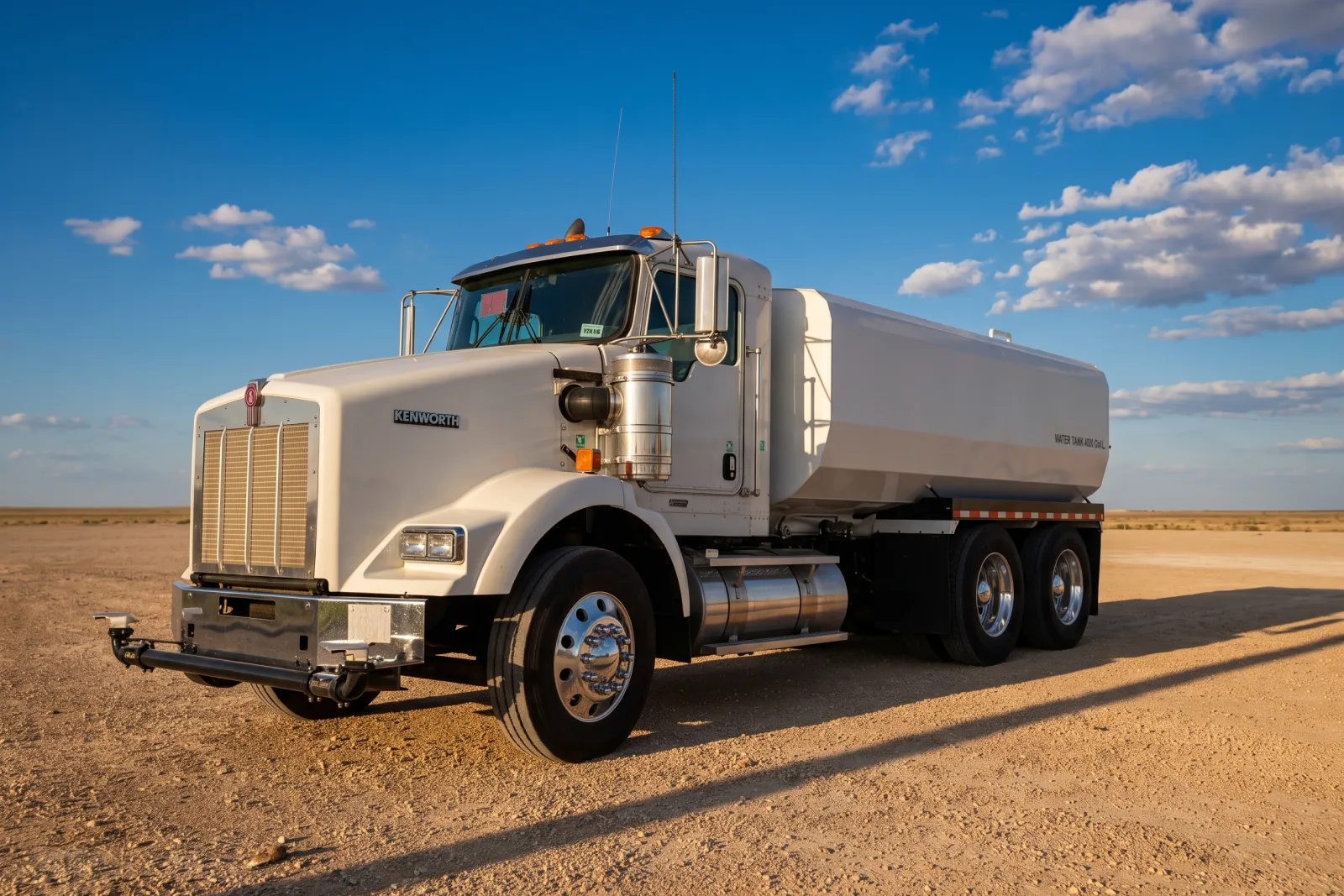
Showing 4 of 4 Water Trucks
13
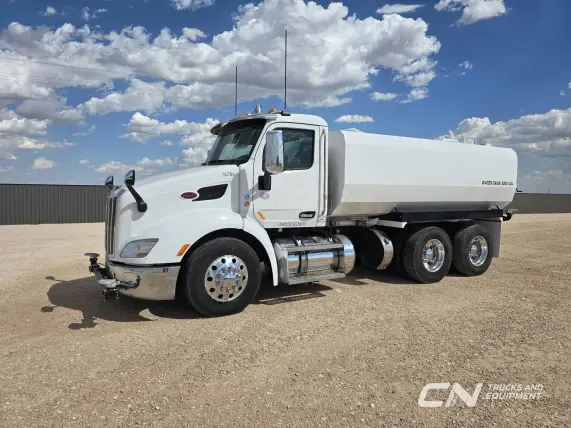
13
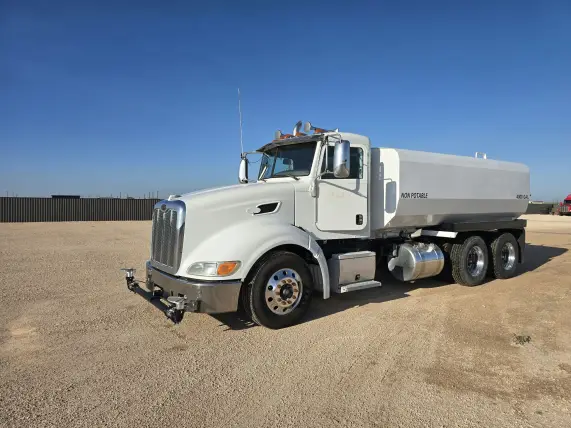
12
10
Buyer's guide
Most buyers land between 2,000 and 4,000 gallons. A 2,000-gallon truck is nimble on tight residential sites and easier on a single-axle chassis. 4,000 gallons is the workhorse size for road jobs and lease roads — one fill covers more ground, but you're now looking at a tandem with real brakes. 5,000-gallon units belong on long hauls and big pads where the water source is far from where you're spraying. Remember the math: water weighs about 8.34 pounds per gallon. A full 4,000-gallon tank is roughly 33,000 pounds of payload before you count the truck. Check the GVWR against the tank, not the other way around.
The pump is the difference between a water truck and a tank on wheels. Most units run a PTO-driven centrifugal pump off the transmission; some older trucks use an auxiliary gas or diesel engine mounted on the deck. PTO setups are simpler and there's less to maintain, but you're pumping only when the truck's running. Auxiliary engines let you pump with the truck off, which matters if you're filling other equipment all day. Whichever you're looking at, ask us to run it. We'll pull the truck up, engage the pump and let you watch it move water before you sign anything.
A dust control truck and a compaction truck want different plumbing. For dust control on lease roads, you want a rear spray bar with good side coverage and side sprays that reach past the shoulder. For compaction behind a blade or roller, a fine, even rear pattern beats volume. A front cannon or bumper spray is what you need for fire knockdown, wash-down or wetting ahead of the truck. Add a hose reel and a 2-inch fitting if you'll be filling other tanks or hitting spots the sprays can't reach. Every water truck we list spells out exactly what spray gear is on it — heads, valves, controls, and whether they're air-operated or manual from the cab.
Steel tanks rust from the inside and from the top saddle where water sits. Surface rust on the shell is cosmetic and common; pitting at the saddle mounts or a weeping seam is not. Baffles matter more than most buyers think — a tank with bad or missing baffles will try to push you through an intersection every time you brake with a half load. If a tank we're selling has a known issue, it's in the listing. Ask and we'll photograph the inside of the manway.
Trucks that lived on Permian Basin leases have usually seen caliche dust, rough roads and long idle hours. That shows up as suspension wear, air system leaks and chewed-up wiring more than it shows on the odometer. Construction trucks tend to have lower miles but more stop-and-go on the drivetrain. Neither is automatically better — it depends on what you're doing next. Tell us the job and we'll tell you which units on our lot are actually a fit and which ones we'd steer you away from.
Call and somebody who's walked around the unit picks up. Want a photo of the frame rail, the tank saddle, or the hour meter? Ask and we'll go shoot it.
Calling about a specific unit? Have the stock number handy.